Skip to content

ClimAct CEE – Boosting the Decarbonised and Low-emission Transformation in CEE

Transforming three pilot urban zones in Bulgaria, Croatia, and Romania into energy-wise, climate-friendly, and clean air spaces for its citizens.

Climate Policy Climate Strategies and Plans

Beitragsbild

Project info

Countries:

Bulgaria, Croatia, Germany, Romania

Project duration:

12/22 - 11/24

Target groups:

Local governments, General public, National governments

Funding:

388,538.03 €

Contact info

Contact:

Ina Karova

Implementing organisation
  • Energy Agency of Plovdiv (EAP)
Partner:
  • Alba Local Energy Agency
  • Deutsche Umwelthilfe (DUH) e.V.
  • North-West Croatia Regional Energy Agency (REGEA)

Background

The European Union (EU) plans for a carbon-neutral economy by 2050 – a far-reaching goal that may not be achieved in Central and Eastern Europe (CEE) unless there is a steady momentum of decisive and well-concerted climate policies and actions. However, boosting the implementation of the climate policies in CEE is capable of improvement as the tangible results of energy and climate interventions take time and persistence to achieve and showcase. To tackle the challenges and advance climate action in this region, more nuanced policies and actions at local and regional levels are needed.
PV power plant on the roof top, Photo: ©Solarimo | Pixabay

Project

ClimAct CEE demonstrates the strength of integrated, evidence-based climate policies through transforming pilot urban zones in Bulgaria, Croatia, and Romania, into energy-wise, climate-friendly and clean air spaces for its citizens. The project proposes a climate screening framework converging energy, climate, and air quality policies that serve as a guided tool to design and implement decarbonised and low-emission city zones, showcasing that integrated policies are a game-changer in fighting climate challenges. The newly created climate-neutral zones are then scaled-up and replicated as flagships of the sustainable, climate-resilient, and energy-independent future of all European cities. To achieve these goals, the project supports local authorities in preparing comprehensive emission and energy inventories of their cities to the ClimAct CEE methodology. The project consults CEE experts and professionals in the field of energy, environment, and climate on developing an emission accounting framework for greenhouse gas and air emissions. Finally, it addresses citizens through climate campaigns within the climate-neutral pilots that will act as climate playgrounds for the public to join and understand the effect of targeted climate actions on decarbonised and low-emission urban transformation.

Results

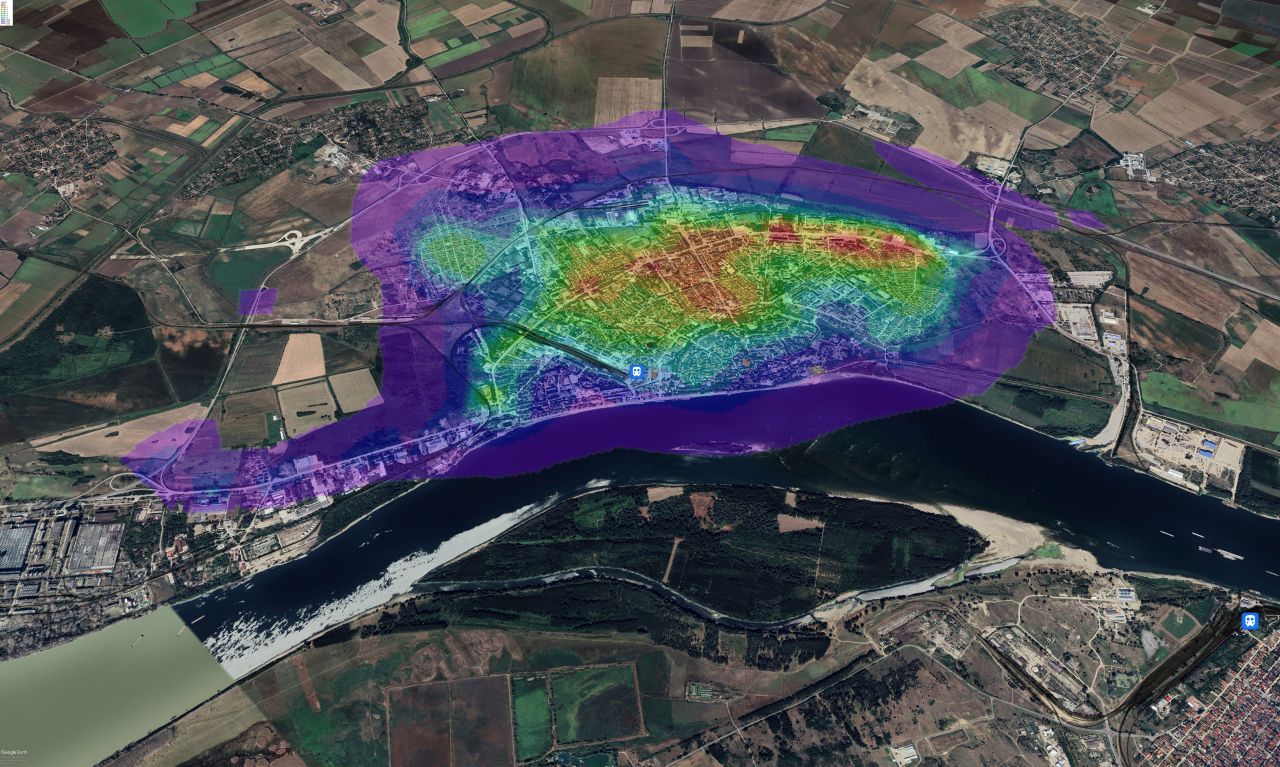
  • Clean air through integrated policy: In Plovdiv, the Energy Agency EAP used CEE instruments to show how much wood-burning stoves contribute to exceeding particulate matter limits. Based on these analyses, the city developed a fossil-free pilot zone in which investments in efficient heating systems and building renovations were initiated. Coal and wood-burning heating systems are gradually being replaced, significantly reducing air pollutants and CO₂ emissions. The experience gained is being incorporated into the follow-up project GINNGER, which is further promoting holistic urban renewal and the phase-out of fossil fuels. In this way, the project shifted local climate policy and household behaviour towards a cleaner, climate-friendly heat supply. 
  • Climate targets incorporated into the city plan: In Karlovac, the ClimAct project contributed to climate targets being integrated as mandatory into the general urban development plan. New buildings are no longer allowed to cover their heating needs with additional natural gas, but must use completely renewable energies or district heating. In parallel, citizens attended workshops to learn about everyday mobility and energy issues and participated in the development of tangible measures such as improved local public transport and more cycling infrastructure.
    • The city is gradually implementing measures to reduce energy consumption and emissions in the historic city centre. In this way, Karlovac is strengthening climate action without jeopardising the neighbourhood’s cultural value. 
  • Romania's first DLEZ as a model: In Alba Iulia, the local energy agency ALEA established Romania's first decarbonised low-emission zone at district level as part of ClimAct CEE. The zone takes into account not only traffic but also emissions from buildings, thus combining air pollution control with climate change mitigation. To this end, ALEA brought together actors who rarely cooperate, such as the city administration, schools, businesses, transport companies and public authorities. Together, they developed practical measures such as the use of surplus electricity from PV systems for electric mobility. This cooperation increases local institutions’ agency and leads to sustainable, cross-sector solutions. Based on the successes achieved in the pilot zone, other cities are planning to adopt the method and develop their own low-emission neighbourhoods.


Last update: March 2026

More about this project

Blog posts

post
14 June 2023

Synergies between the ClimAct CEE and ASCEND Project

Publications

publications
22 July 2024

The Decarbonized and Low-Emission Zone Cookbook