
Panda Labs for a Just Transition
This project is completed. Advancing the Just Transition in Bulgaria, Serbia, North Macedonia, and Montenegro by engaging young people in green entrepreneurship.
Coal Phase-out Education Energy Transition Just Transition
Project info
Bulgaria, Montenegro, North Macedonia, Serbia
10/21 - 09/23
Educational institutions, Local governments
588,717.74 €
Contact info
Kostadin Andonov
- Association Junior Achievement Macedonia
- Eco-team
- Junior Achievement Bulgaria
- WWF Adria - Serbia
Background
Coal regions in Bulgaria, Montenegro, North Macedonia and Serbia have been under severe economic strain and face severe social issues as Europe embarks on a course for rapid decarbonisation. Funding to ensure a Just Transition is often made available, yet a critical ingredient is missing in all four countries: the human and social capital, future vision, and entrepreneurship potential of a young generation, which is rapidly moving to large cities and Western European countries in search of better economic opportunities.
Project
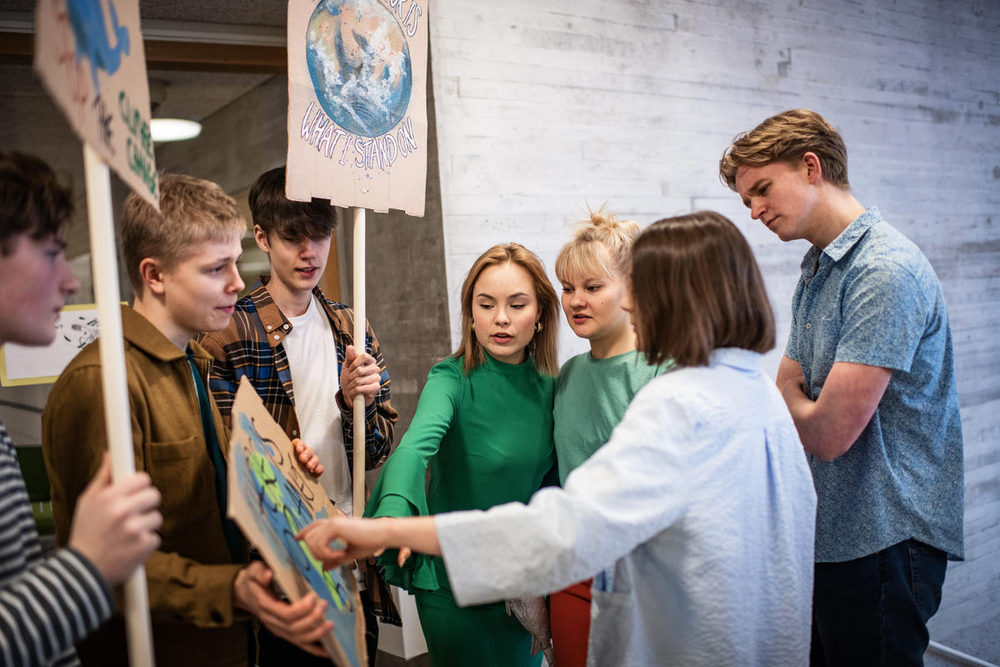
The project team targeted young people living in coal regions affected by structural change. The project focussed on one coal region in each country and worked with high school students, university students and young entrepreneurs.
The aim of the project was to raise these people’s awareness of the challenges of a just structural change in coal regions and to actively involve them in solving the problem. To this end, they established a culture of innovation that encouraged young people to become climate-conscious entrepreneurs and create green jobs and sustainable livelihoods in the regions.
The project team designed and implemented an educational programme for young people that promoted their entrepreneurial skills. For example, the team developed a curriculum for high schools and created a pipeline for young entrepreneurship, specifically for people between the ages of 15 and 25, in the coal regions. The team received support from school administrators, local authorities, professionals driving green technologies and climate innovation, and mentors in science, technology, engineering and maths (STEM). The programme drew on a proven methodology used by WWF in its EUKI project Panda Labs to develop innovative solutions. This included concepts such as design thinking, learning by doing and the transnational exchange of young people on green innovations.
In the long-term, this enabled the establishment of local networks of green entrepreneurs, who would tackle the technological and social problems of transitioning their local economies away from coal mining economy.
Results
- As part of the project, 887 young people in Bulgaria, Montenegro, North Macedonia and Serbia were successfully trained in green innovation and green entrepreneurship. Many of them are now working in companies in the region that focus on green and sustainable business ideas. Students and pupils will continue to be trained for the green transformation of coal regions with the educational programmes for universities and schools developed by the project team.
- The project established an online network with over 450 participants, from which 102 ideas for green innovations in the context of just structural change in coal regions in Bulgaria, Montenegro, North Macedonia and Serbia have emerged.
- As part of the project, a successful partnership was established with the European Commission Representation in Bulgaria, which led to two impressive study visits to Brussels. The cooperation enabled the best hackathon teams from Bulgaria to visit EU institutions in Brussels. During the study visits in 2022 and 2023, fourteen Bulgarian participants had the opportunity to meet representatives of the European Commission’s Directorate-General and exchange views with them on the just structural transformation of coal regions. This exchange paved the way for a potential long-term partnership with the European Commission Representation in Bulgaria.
Last update: July 2024