
Avoid, Reduce, Substitute – Climate Action in the School Canteen
Welchen Einfluss haben Schulkantinen auf unser Klima? Mit dieser Frage beschäftigte sich das Projekt CLIKIS („Climate-friendly Kitchen in Schools“) und präsentierte die Projektergebnisse auf seiner Abschlusskonferenz am 13. Juni 2019 in Krakau, Polen. Das Projekt kooperierte mit fünf polnischen Schulen und führte in deren Großküchen Maßnahmen für klimafreundlichere Mahlzeiten ein. Das Vorhaben wurde in Anlehnung an das zuvor in Deutschland durchgeführte Projekt KEEKS (Klima- und energieeffiziente Küche in Schulen) realisiert.

At the conference, Katrin Bienge from the Wuppertal Institute for Climate, Environment and Energy pointed out that animal products for human nutrition cause almost 80% of greenhouse gases. She illustrated this with a list of the ten most popular dishes in Polish school canteens and how much CO2 they produce per serving. The worst result by far? Pork steaks! They produce a CO2 footprint more than twelve times higher than that of a plate of vegetable soup. Joanna Wis-Bielewicz of the Polish organisation Stowarzyszenie Gmin Polska Sieć PNEC (The Association of Municipalities Polish Network (‘Energie Cités’) also spoke in favour of a climate-friendly diet with more plant-based meals. She reported on the tangible consequences of climate change. These are already being felt in Poland today, especially as a result of increased desertification and the heightened risk of forest fires.
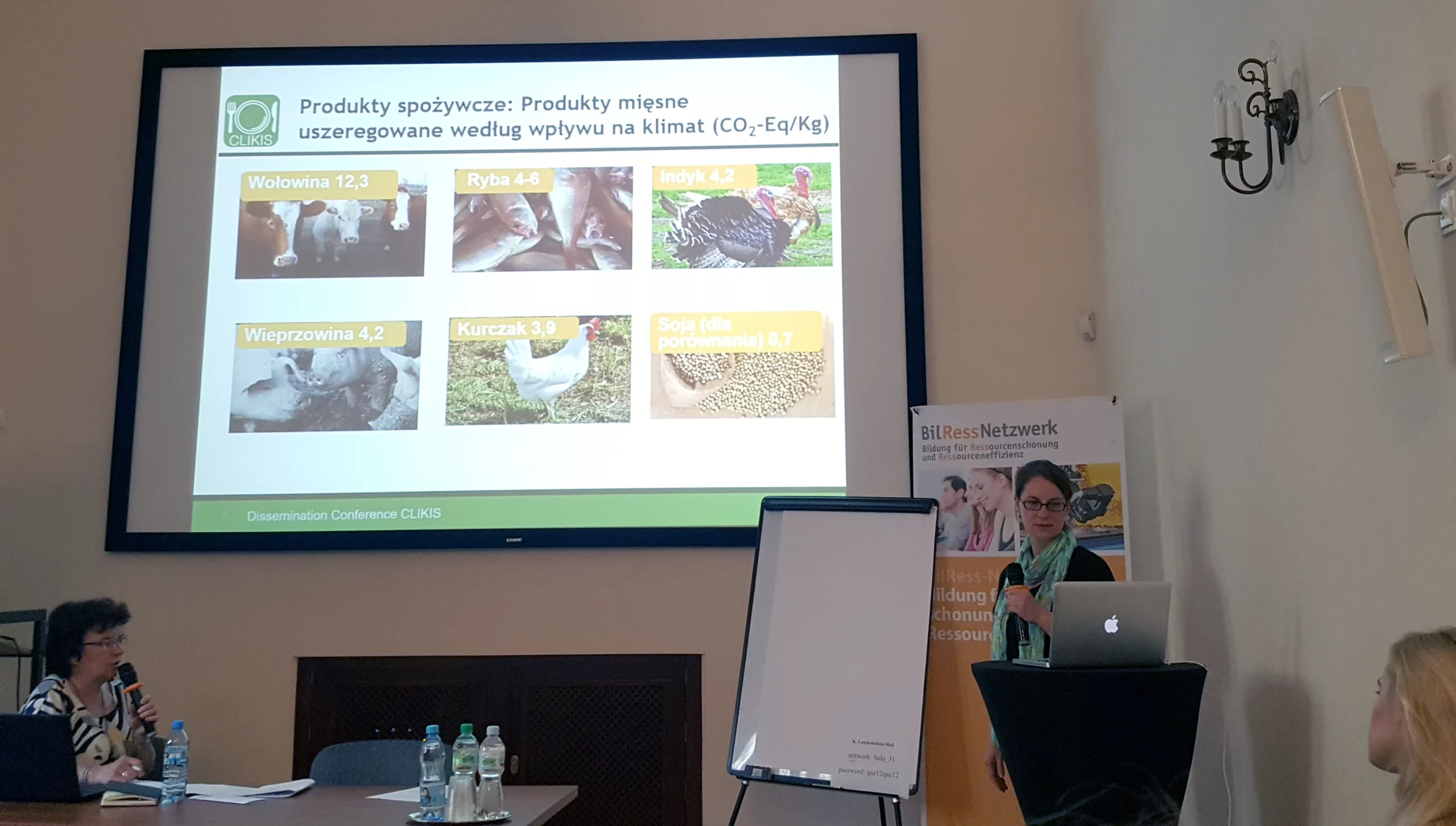
The CLIKIS project targets the reduction of CO2 emissions in Polish school kitchens, mainly through train-the-trainers seminars. Kitchen managers also receive further training in workshops, where they learn more about the connection between climate change & nutrition and receive practical tips for energy-saving school kitchen operations. The ecological footprints of 24 German school canteens had already been analysed in the earlier CLIKIS project, so the valuable experience gained in Germany was simply transferred to the Polish school canteens.
‘Avoid, reduce, substitute’ – Katrin Bienge referred to these three key terms for climate-friendly school kitchens at the Krakow conference. She also suggested several concrete measures, such as consuming less meat, replacing butter more often with vegetable oils and substituting dairy products with herbal alternatives. Malte Schmidthals of the Institute for Future Studies and Technology Assessment (IZT) also mentioned the use of more efficient kitchen appliances and improved planning, because well-conceived menus would result in much less food ending up in the bin. Tomasz Pawelec of PNEC informed the conference participants that CLIKIS had analysed the menus at five Polish schools, hosted workshops for cooks and made recommendations for savings measures.
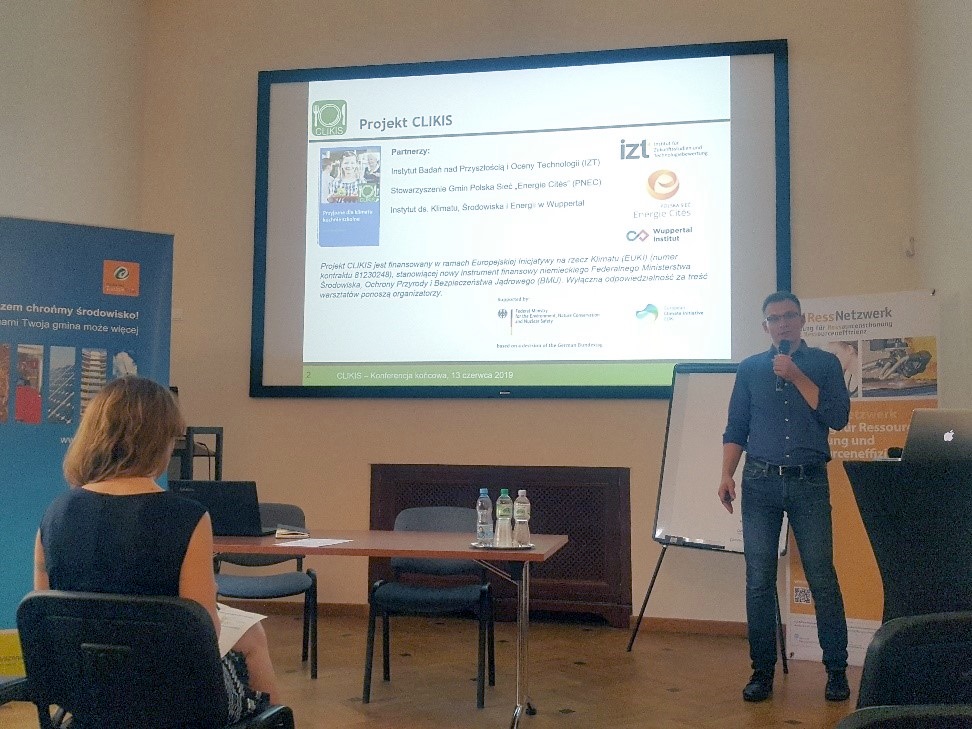
CLIKIS is one of several projects of the European Climate Initiative (EUKI) to raise awareness in schools. The Federal Ministry for Economic Affairs and Climate Action (BMWK) is thus promoting the early awareness of climate change and climate action in children. The CLIKIS project is just one example of how simple measures can save a great deal of CO2 and improve the quality of performance at the same time.