Energy Transformation Debate in CEE
The project is completed. It aimed at changing the political and public narrative in Central and Eastern European countries, providing positive perspectives on the opportunities of the energy transformation.
Coal Phase-out Energy Policy Energy Transition and Climate-Neutral Buildings
Project info
Bulgaria, Czech Republic, Germany, Latvia, Poland, Romania, Slovakia
02/20 - 07/21
Civil society, Local governments, National governments, Regional governments, Media, EU institutions, General public
349,068.00 €
Contact info
Petr Hlobil
- Deutsche Umwelthilfe (DUH) e.V.
- E3G - Third Generation Environmentalism gGmbH
Background
The project builds on the previous project “Accelerating the CEE Energy Transformation and Learning from the German Experience” that targeted the same countries. It is aware that ambitious climate policies have been traditionally challenging to implement in CEE countries, as the low-carbon transition is mostly discussed as a problem rather than an opportunity. Thus, the Just Transition approach offers a positive change to the narrative, cutting across the “climate vs. jobs” divide by stressing that the low-carbon transition needs to be just and fair for affected workers and regions. The approach has already shown positive effects in CEE countries.
There is a growing pro-transformation movement, evidenced by the targeted activity of civil society, initial shifts in the public debate regarding climate and energy, and local stakeholders calling for a Just Transition. It is relevant to further mobilise government officials, mayors, academics, businesses, and local stakeholders to foster ambitious climate policy as the EU’s climate and energy targets cannot be reached without support by CEE.
Project
The project contributed to more ambitious and effective climate and energy policies in Central and Eastern Europe (CEE), focusing on Bulgaria, Romania, Slovakia, the Czech Republic, Poland, Latvia, and Hungary. It encouraged climate-progressive voices to raise awareness on the socio-economic benefits of the energy transformation. It provided strategic support to local stakeholders, thus supporting them in making their voices heard by decision-makers and in carrying out direct advocacy with EU institutions. By creating a space for communication, the project opened the narrative to different perspectives and created an environment for policy change.
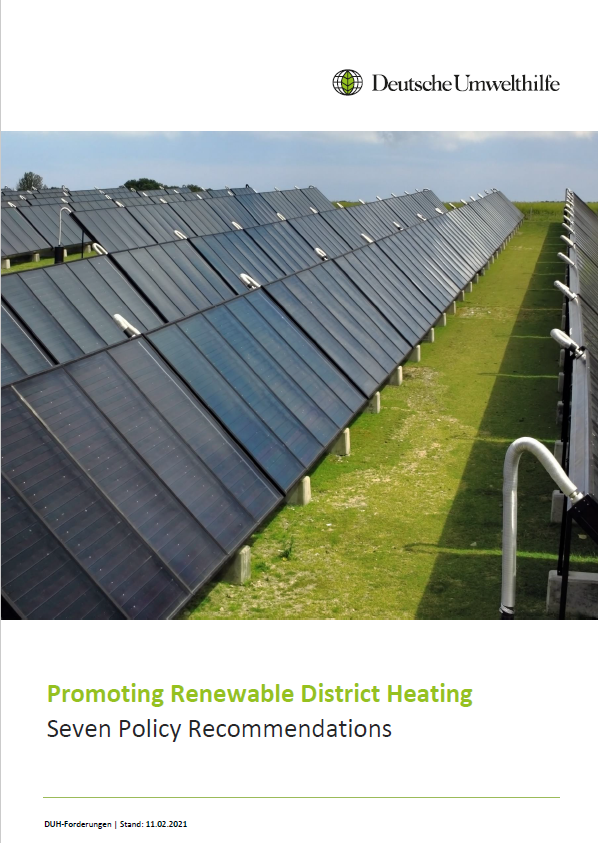
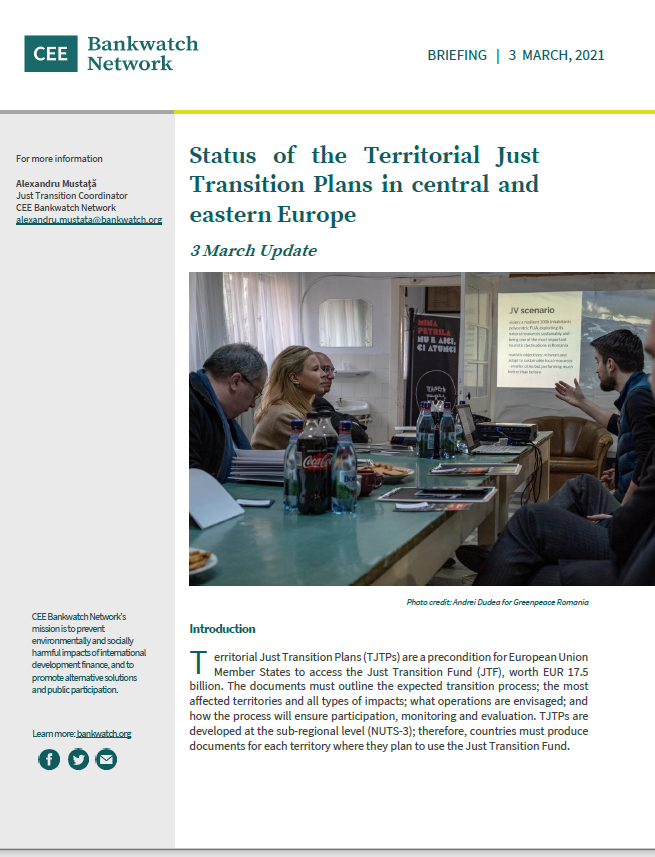
It consisted of communication, advocacy, and networking actions. Thus, three work packages were implemented over a period of 1.5 years: first, a communication campaign to target decision-makers, second, joint advocacy work to influence policies, and third, joint activities to support CEE stakeholders in networking and mutual learning. Publications provided political analysis and practical guidelines on implementing the energy transformation and Just Transition as well as meetings in coal regions, workshops for energy transformation stakeholders in target countries, international networking events, and web seminars.
State of Results
- The project has contributed to the policy dialogue and especially the development of the Resilience and Recovery Plans with 23 studies and position papers, media work, and 60 events with more than 200 decision makers from politics and administration, enhancing them with an inclusive perspective.
- With the largest stakeholder groups in Europe (CAN, EEB, Green 10) and many national stakeholders, the project has built or consolidated alliances to improve the concept and concrete projects to implement the energy transition. In the process, lock-ins as well as harmful investments were identified and multi-level participation of civil society interests was promoted.
- By helping to shape the public debate, the project has helped move the coal phase-out issue from an IF to a WHEN. Romania set a coal phase-out for 2032 during the project period. In Bulgaria, a coal commission was established. And in Poland, too, a historic agreement was reached between the coal industry and the government on a phase-out by 2049.
Last update: July 2024